Science
Class targets for science
Contents
- Science Fayre
- Curriculum Intention
- Teaching Strategies
- Skills Map
- Curriculum Overview
- Science Day 2022
- Action Plan 2022-2023
- Exemplification (Coming soon)
Science Fayre!
Each year, the school hosts a Science Fayre. Pupils present a Science project to the rest of the school, explaining the science behind it and answering questions.
Super Scientist 2022 - Arabella Slattery!
Dear Pupils,
Are YOU a mad scientist or amazing inventor? If so, the 4th of July 2022 is your chance to prove it to the world! This is the day when the school will be hosting its very first Science Fair with one person being crowned the St. Joseph’s School Super Scientist.
What do you need to do?
- First, create a Science project. Perhaps you can build your own exploding volcano, make your own paint from natural ingredients or construct a robot. Bring in your project for judging.
- In addition to this, you will need to have created an annotated design of your invention.
- Finally, you need to be able to talk about your invention and show your understanding of the Science behind it.
Once you have created your Science project, bring it into school on Monday the 4th of July. Make sure any parts of your project have your FULL NAME and class clearly labelled on them. At the end of the week, a super scientist will be chosen.
Good luck! I look forward to seeing your amazing inventions soon.
- Mr. Stacey
Curriculum Intention
Our science curriculum is designed to ensure that scientists are:
- inquisitive, curious and knowledgeable about the world around them
- able to apply their scientific knowledge when investigating
- able to build arguments and explain key concepts
- considerate of the uses and implications of science both today and in the future
- As a small -school with a predominantly white- British intake, situated in a coastal community, we want the curriculum to inspire our pupils' curiosity to ask questions about the world.
- We make links through our science to the great outdoors and our unique coastal location.
- Science has strong links to our SMILE curriculum through Health and well-being and Keeping safe.
Teaching Strategies We Implement
Our Science curriculum plan has been designed to ensure a sequence of knowledge and concepts.
Pupils in Key Stages 1 and 2 will cover a new Science topic each term. The class teacher will assess the best way to deliver this module; it might be taught in weekly sessions, over a half-term, during a Science day or any other appropriate sessions.
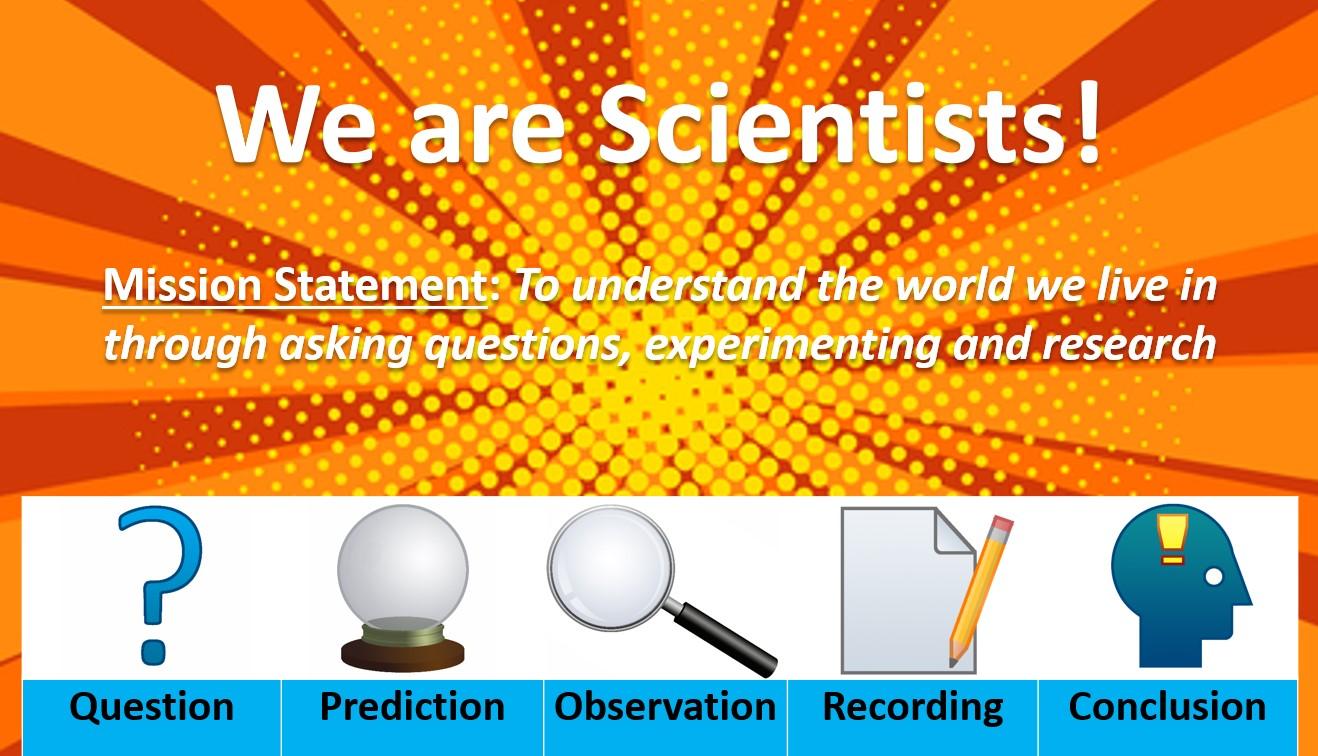
In September 2021, we introduced a skills map for Science. This is shown below. As a school, we are currently in the process of embedding these skills. In addition to teaching Science Knowledge, teachers ensure that pupils use one or more of these skills in their Science lessons.
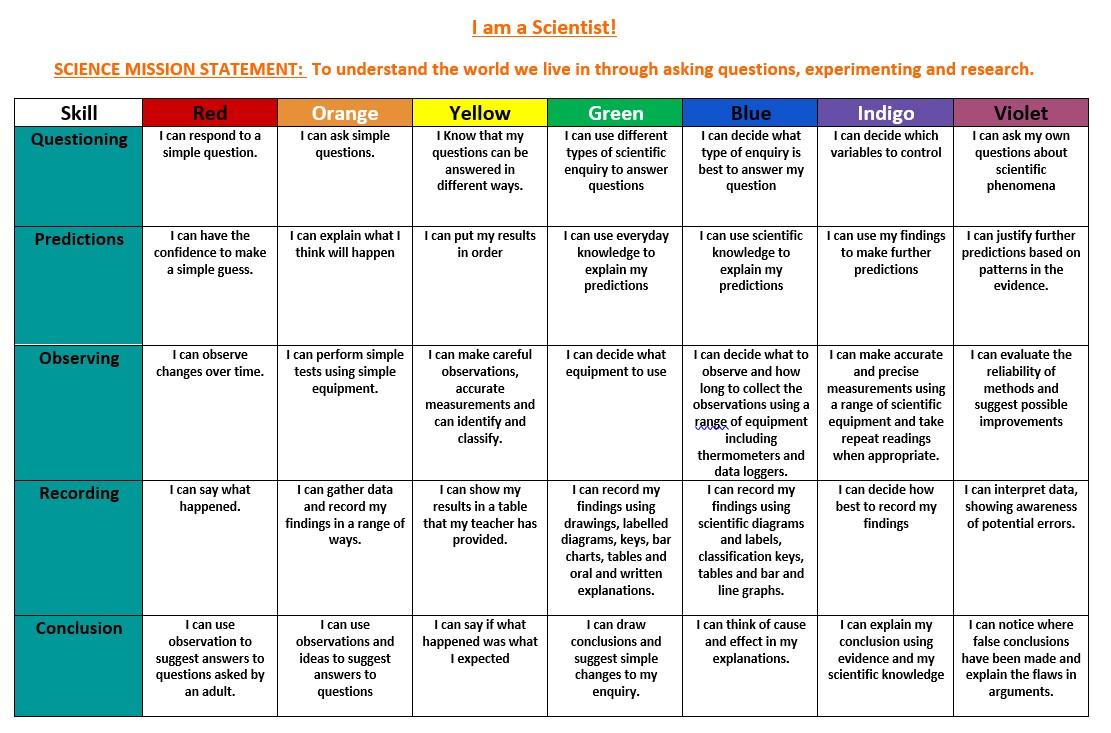
Curriculum Overview


Science Day
Science skills are further reinforced during an annual Science day. During this day, students carry out different Science investigations, focusing on using these skills during these activities.
Photos from our latest Science Day are show below.
Class 2 Science Day
In Class 2, we were investigating waterproof materials. We made our predictions based on our prior knowledge of materials and then tested a range of materials by squirting water onto each piece of material. From our observations we were able to see if a material was waterproof by identifying if water could pass through the material or not and if the material became weak and tore once it was wet. We recorded our results in a table and used these results to write our evaluations.
science


Class 4 Science Day
Science Action Plan 2022 - 2023


STEM Activities for Children in All Schools: